August 15, 2025
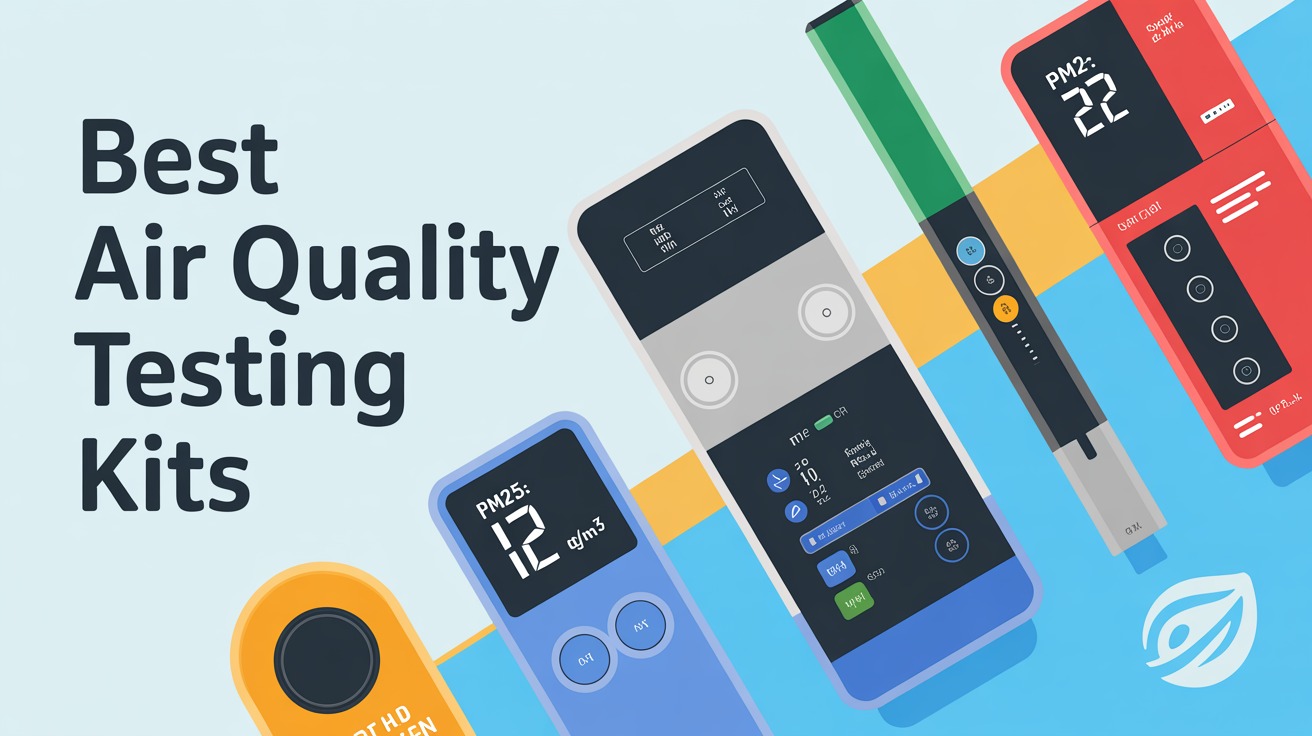
Best Air Quality Testing Kits
Indoor vs Outdoor Air Quality Testing
Choosing the right air quality test kit for your home doesn’t have to feel like a science project. The best home air quality test kit for you depends on what you actually want to detect — radon in the basement, mold after a leak, VOCs from a recent renovation, PM2.5 from wildfire smoke, or all of the above. This guide compares budget DIY strips, mid-range consumer monitors, premium pro-grade devices, and mail-in lab kits available in Canada in 2026 — from $25 single-use cards to $800 multi-pollutant monitors. We test air quality professionally across Ontario and Quebec, so the recommendations below reflect what actually works in Canadian homes.
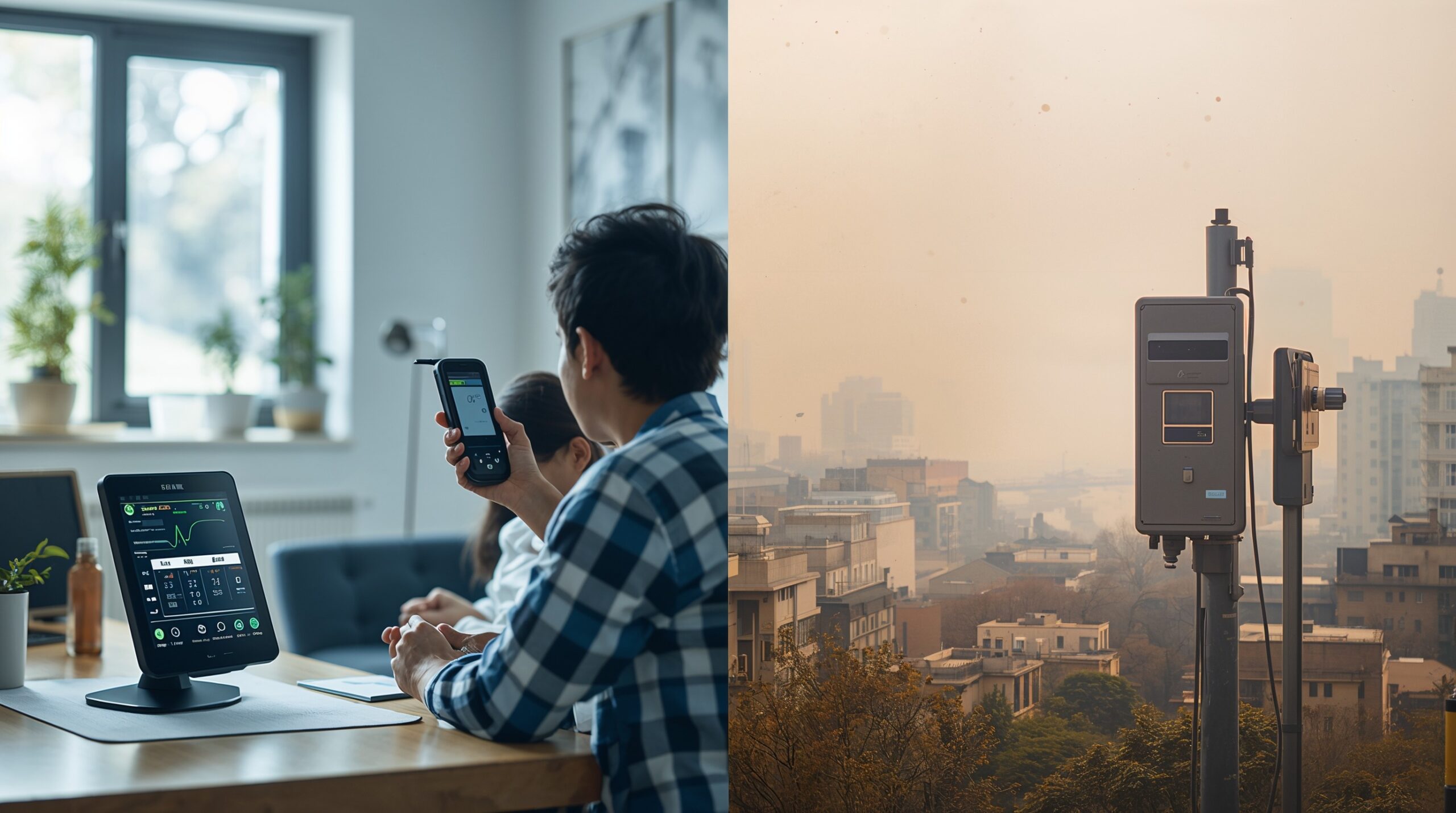
Indoor Testing Kits
Indoor air quality test kits target the pollutants that actually build up inside Canadian homes — mold spores, volatile organic compounds (VOCs), formaldehyde from new furniture, carbon dioxide from poor ventilation, and PM2.5 from cooking and wood stoves. Most indoor kits work in any room.
- Cost: $50–$200
- Tests: Mold, VOCs, CO2, formaldehyde, PM2.5
- Best for: Bedrooms, basements, kitchens
- Accuracy: Good for home screening
Professional residential testing provides lab-grade results when DIY kits flag a problem.
Outdoor Testing Needs
Outdoor testing focuses on particle pollution and smog. These monitors measure PM2.5 from traffic and wildfire smoke. Canadian cities like Montreal and Ottawa need outdoor monitoring during summer smog season and wildfire-driven air-quality alerts.
- Cost: $300+ for professional-grade
- Tests: PM2.5, smog, traffic pollution
- Best for: Urban areas, near highways
- Accuracy: Professional monitoring required
What Pollutants Can Air Quality Test Kits Detect?
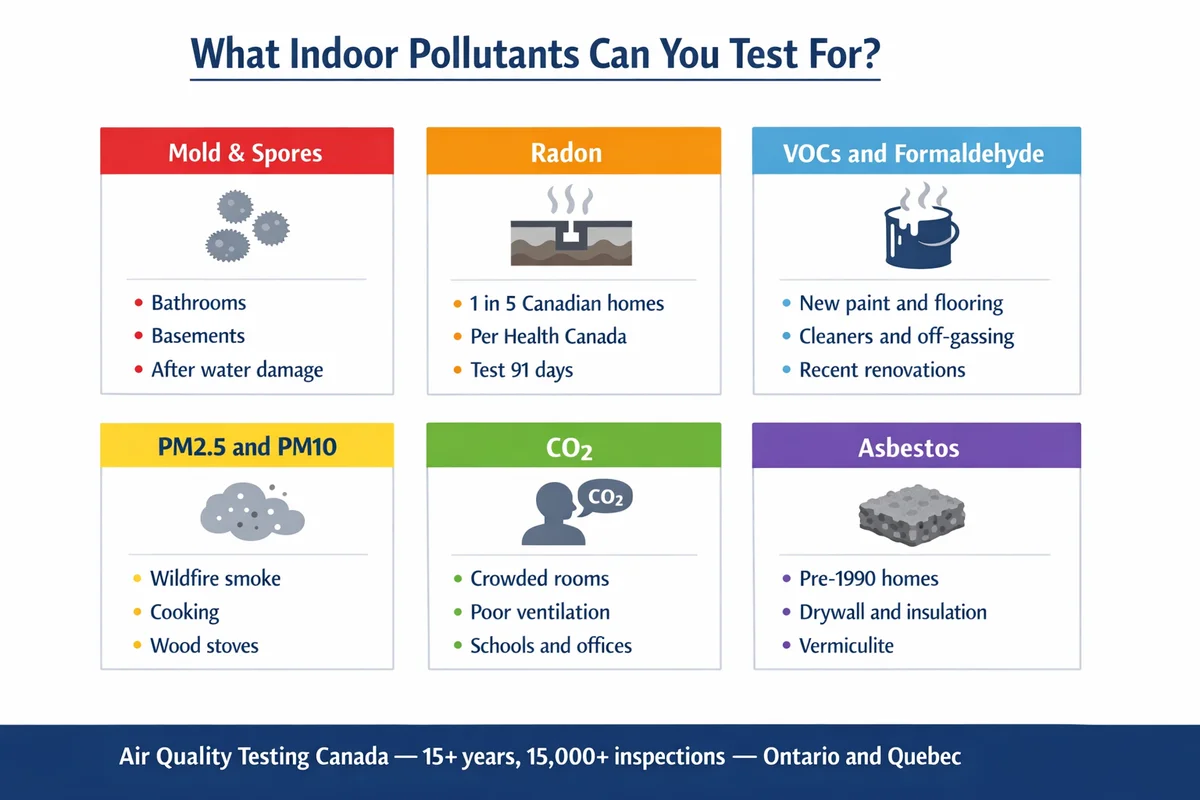
A modern air quality test kit can detect six classes of indoor pollutant. Pick a kit that matches the contaminants you actually want to measure — there’s no point buying a $400 monitor for radon if it doesn’t have a radon sensor.
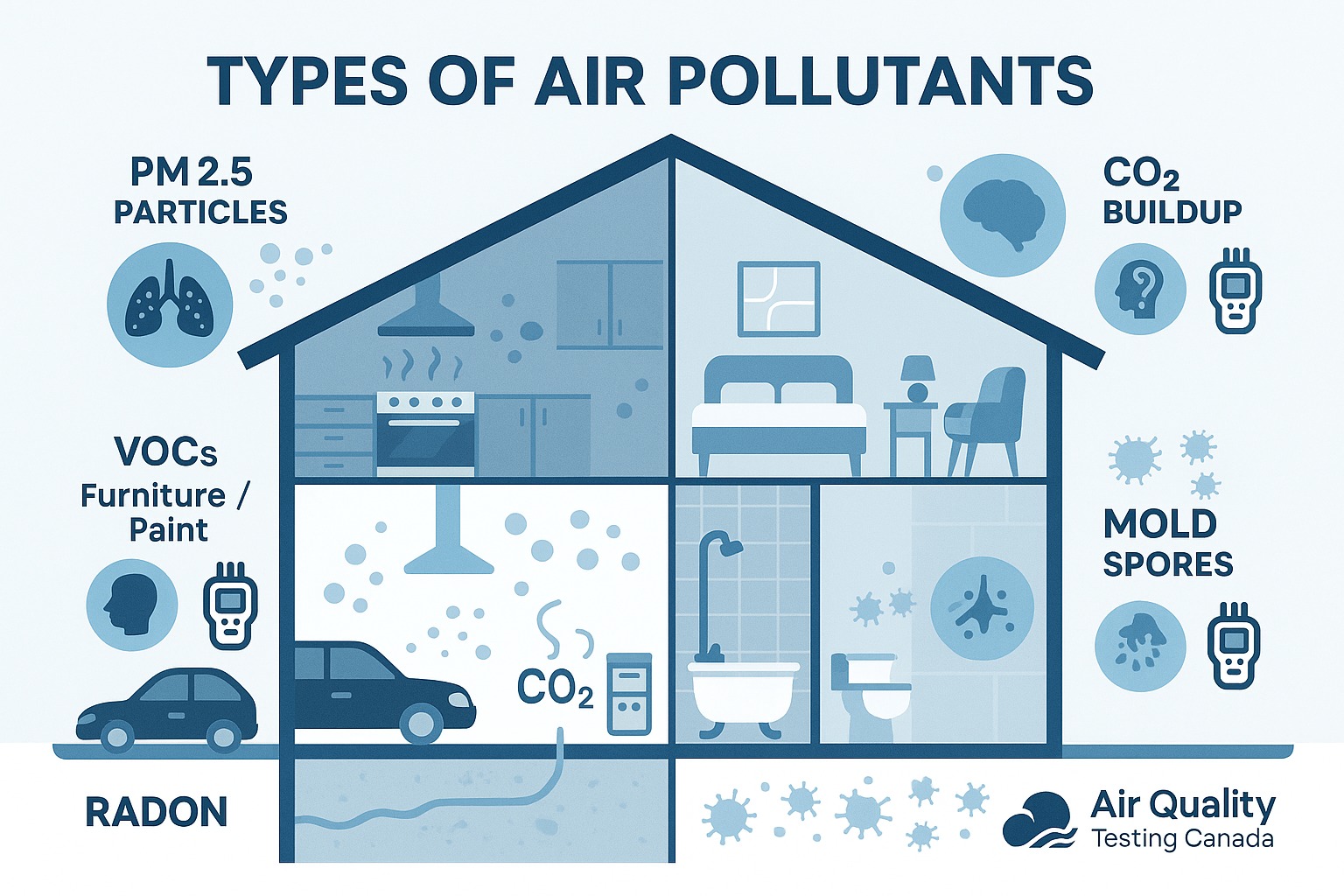
PM2.5 particles are tiny pollution specks smaller than a human hair. They come from car exhaust, wood burning, cooking, and wildfire smoke. PM2.5 causes lung damage and heart problems over time. Indoor PM2.5 should average under 12 µg/m³.
Testing Cost: $80–$150
Technology: Laser sensors for real-time counting
High CO2 levels make you feel tired and cloudy-headed. Bedrooms, schools, and offices often have CO2 problems from poor ventilation. Outdoor CO2 sits around 420 ppm. Indoor levels above 1,000 ppm cause drowsiness — open a window or run the HRV.
Testing Cost: $60–$120
Safe Levels: Below 1,000 ppm
VOCs come from cleaning products, new paint, MDF furniture, vinyl flooring, and air fresheners. They cause headaches, dizziness, and breathing problems. New homes often have high VOC levels for the first 6–12 months. A simple VOC test kit flags whether you have a problem; the next step is identifying the source.
Testing Cost: $100–$250
Sources: Furniture, paint, cleaning products
Radon is a naturally-occurring radioactive gas that seeps from soil into basements, sump pits, and foundation cracks. Long-term radon exposure is the second-leading cause of lung cancer in Canada after smoking. The simplest radon test kit for most Canadian homeowners is an alpha-track passive detector you mail to a lab after 91 days. For ongoing readings, a Corentium Home 2 or Aranet Radon Plus gives you live data on your phone. Whichever radon test kit you pick, make sure it’s listed by the C-NRPP — that’s the standard Health Canada points to.
Testing Cost: $25–$50 (basic), $200–$400 (digital)
Test Duration: 91 days minimum
Mold grows in damp areas like bathrooms and basements. Spores float in air and trigger allergies, asthma, and infections. A spore-trap mold test kit ($80–$150) ships to a lab for genus-level identification. Cheaper at-home kits use settle plates or strips and are screening only.
Testing Cost: $30–$150
Professional Option: Professional mold testing
Pre-1990 Canadian homes may contain asbestos in insulation, vermiculite, drywall, popcorn ceilings, or vinyl tiles. Disturbed asbestos releases fibres that cause lung disease and cancer. An asbestos test kit for airborne fibres uses a filter cassette you mail to a lab — not a substitute for bulk-sample testing of suspected materials.
Testing Cost: $150–$250 per air sample
Service: Asbestos testing services
- Test for at least 91 days during fall or winter (closed-house conditions)
- Use a C-NRPP certified kit (Canadian National Radon Proficiency Program)
- Canadian guideline action level: 200 Bq/m³ — above that, hire a certified mitigator
- 1 in 5 Canadian homes has elevated radon — Ontario and Quebec are both high-risk regions
Sources: Health Canada — Testing your home for radon and Take Action on Radon.
Air Quality Testing by Use Case
Different spaces need different testing approaches. Choose kits designed for your specific environment and the question you’re actually trying to answer.
Home testing kits focus on comfort and health. Families need kits that test for allergens, chemicals from cleaning products, and poor ventilation. The best home air quality test kit is easy to use without technical training.
Popular home testing covers PM2.5, CO2, and VOCs. Many Canadian homes also need radon testing, especially in Ontario and Quebec where granite bedrock pushes radon risk up.
Understanding air quality test results helps homeowners take action after testing.
Office buildings often have ventilation problems that hurt worker productivity. Poor office air causes sick building syndrome — fatigue, headaches, and frequent colds.
Office testing focuses on CO2 levels, particle pollution, and chemicals from office equipment. Professional office kits cost $200–$500 but provide detailed reports for building managers.
Commercial air quality testing services handle complex office testing needs.
Industrial facilities need specialized testing for workplace safety. These environments may have chemical vapours, metal particles, or toxic gases that require professional-grade detection equipment.
Industrial testing kits cost $500–$2,000. They meet occupational health standards and provide legally acceptable results for safety compliance.
Research applications need the highest accuracy levels. University labs, medical facilities, and environmental studies require calibrated instruments with documented precision.
Scientific air quality monitors cost $1,000–$5,000. These instruments provide research-grade data with certification documents.

Budget vs Premium Air Quality Test Kits
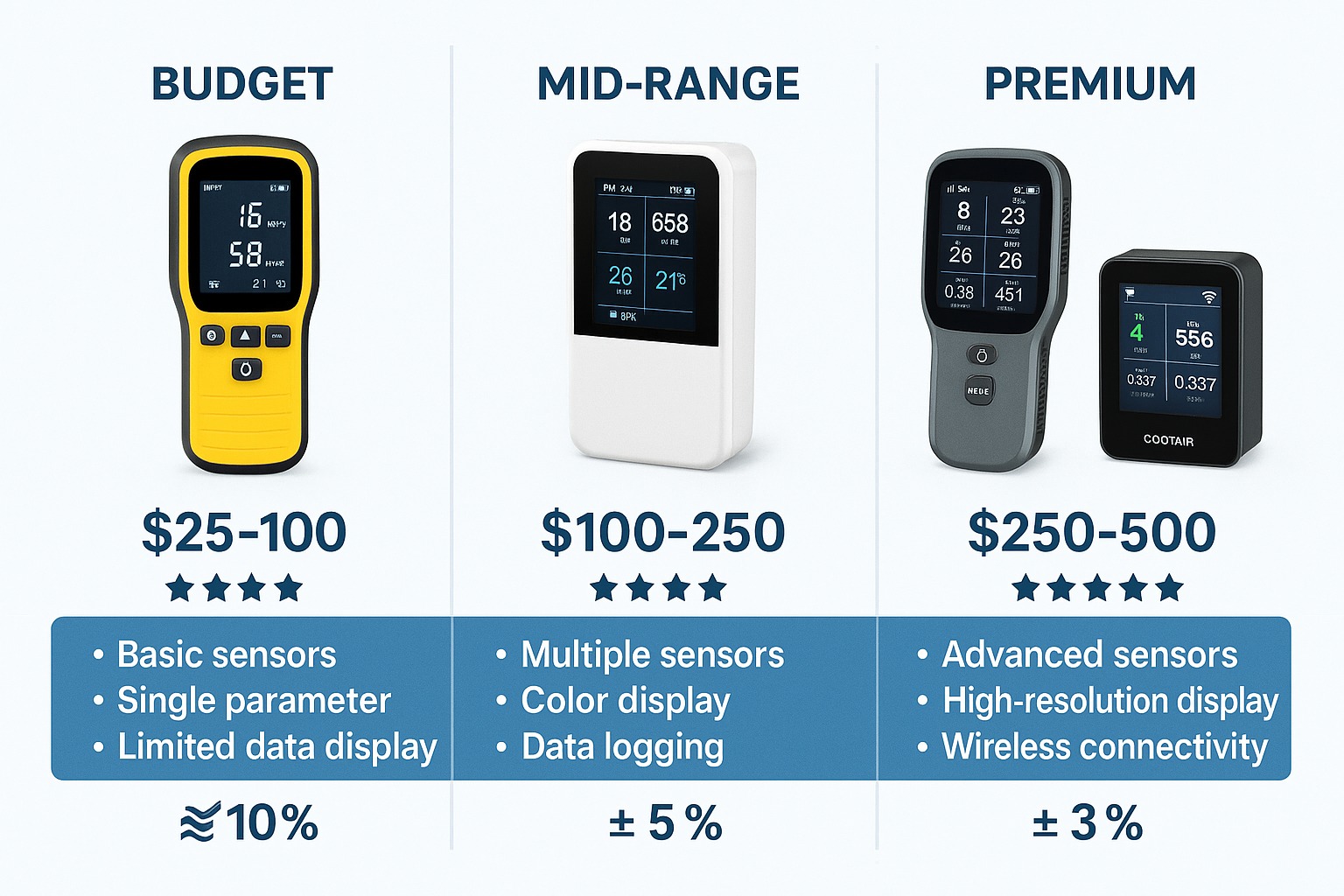
Air quality test kits range from $25 basic strips to $800 professional monitors. Choose based on your accuracy needs and budget.
Budget Testing Options
Budget kits work well for basic screening. These include radon test strips, mold sampling plates, and simple particle counters. Budget options help you decide if you need professional testing.
- Basic PM2.5 monitors show general trends
- VOC detectors show presence, not specific levels
- Good for initial screening
- Results may lack precision for health decisions
Mid-Range Testing Solutions
Mid-range kits provide better accuracy and more features. These monitors connect to smartphone apps and store data over time. Mid-range options work well for most Canadian homes.
- Multi-pollutant testing in one device
- Smartphone app connectivity
- Historical data storage
- Air quality improvement recommendations
Premium Professional Kits
Premium kits offer laboratory-level accuracy and detailed reporting. These monitors include calibration certificates and meet professional standards. Premium options make sense for people with serious health conditions or anyone running a 91-day radon test alongside other monitoring.
- Laboratory-level accuracy
- Specific chemical identification
- Medical-grade precision
- Includes radon (View Plus, Wave Plus, Aranet Radon Plus)
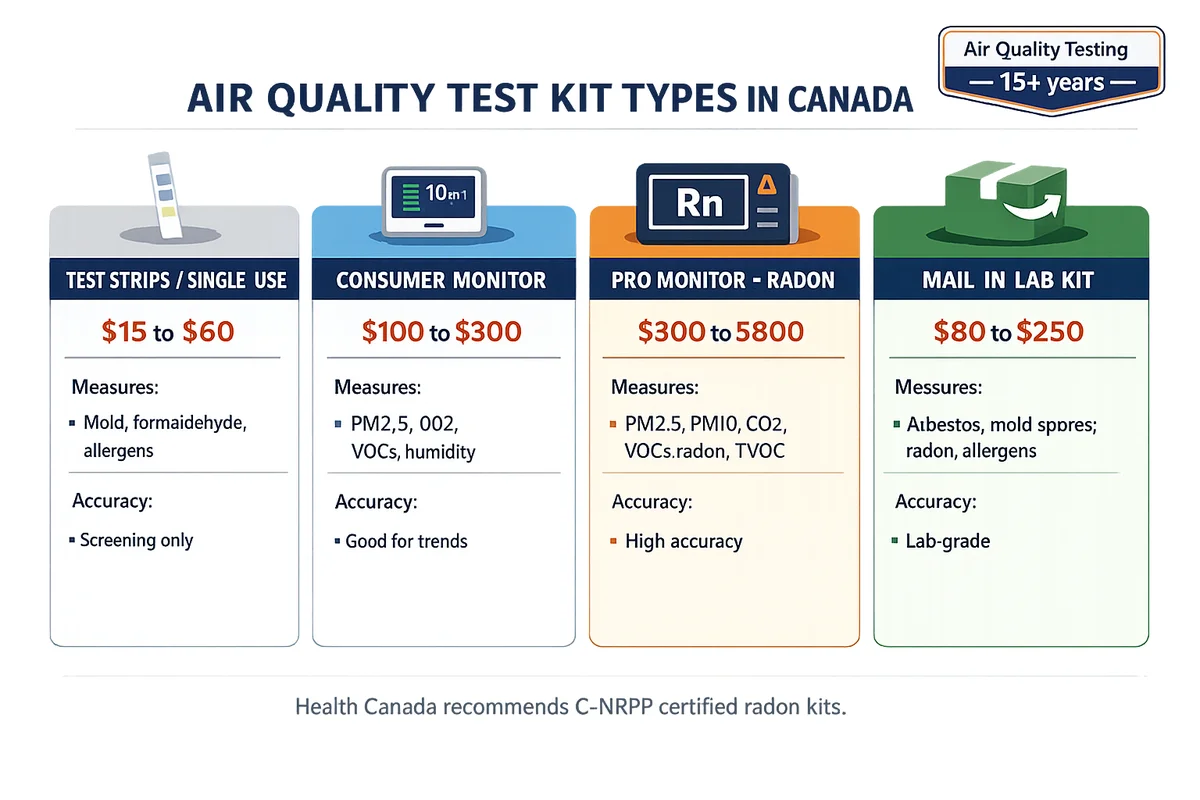
Device Types: Digital Monitors vs Strips vs Lab Kits
Air quality testing comes in three main formats. Each one fits a different question.
Digital Air Quality Monitors
Digital monitors give instant results on built-in screens or smartphone apps. They run continuously and track air quality changes throughout the day.
- Real-time monitoring
- Smartphone connectivity
- Historical data tracking
- Cost: $80–$800
Best for: Ongoing monitoring and tracking patterns
Test Strips and Quick Tests
Test strips give fast results for specific pollutants. Expose the strip to air for a set time, then compare colours to a chart. Results in 5–30 minutes.
- Fast results (5–30 minutes)
- No batteries or apps needed
- Single-pollutant testing
- Cost: $10–$50 per test
Best for: Emergency testing or one-time screening
Mail-in Laboratory Analysis
Lab analysis gives the most accurate results for specific pollutants. Collect air samples in special containers, then mail them to certified Canadian laboratories for detailed analysis.
- Highest accuracy available
- Specific pollutant identification
- Legally defensible results
- Cost: $80–$250 per sample
Best for: Pre-purchase home testing and legal situations
Smart Features: Handheld vs App-Connected Testers
Modern air quality testing includes smart features that make monitoring easier and more useful for daily life.
Handheld Basic Monitors
Handheld monitors work independently without smartphone connections. They have built-in screens and simple buttons. Basic monitors cost less and work reliably without technical setup.
- No WiFi or apps required
- 8–12 hours battery life
- Works anywhere
- Clear digital displays
Best for: Professional inspectors and non-technical users
App-Connected Smart Monitors
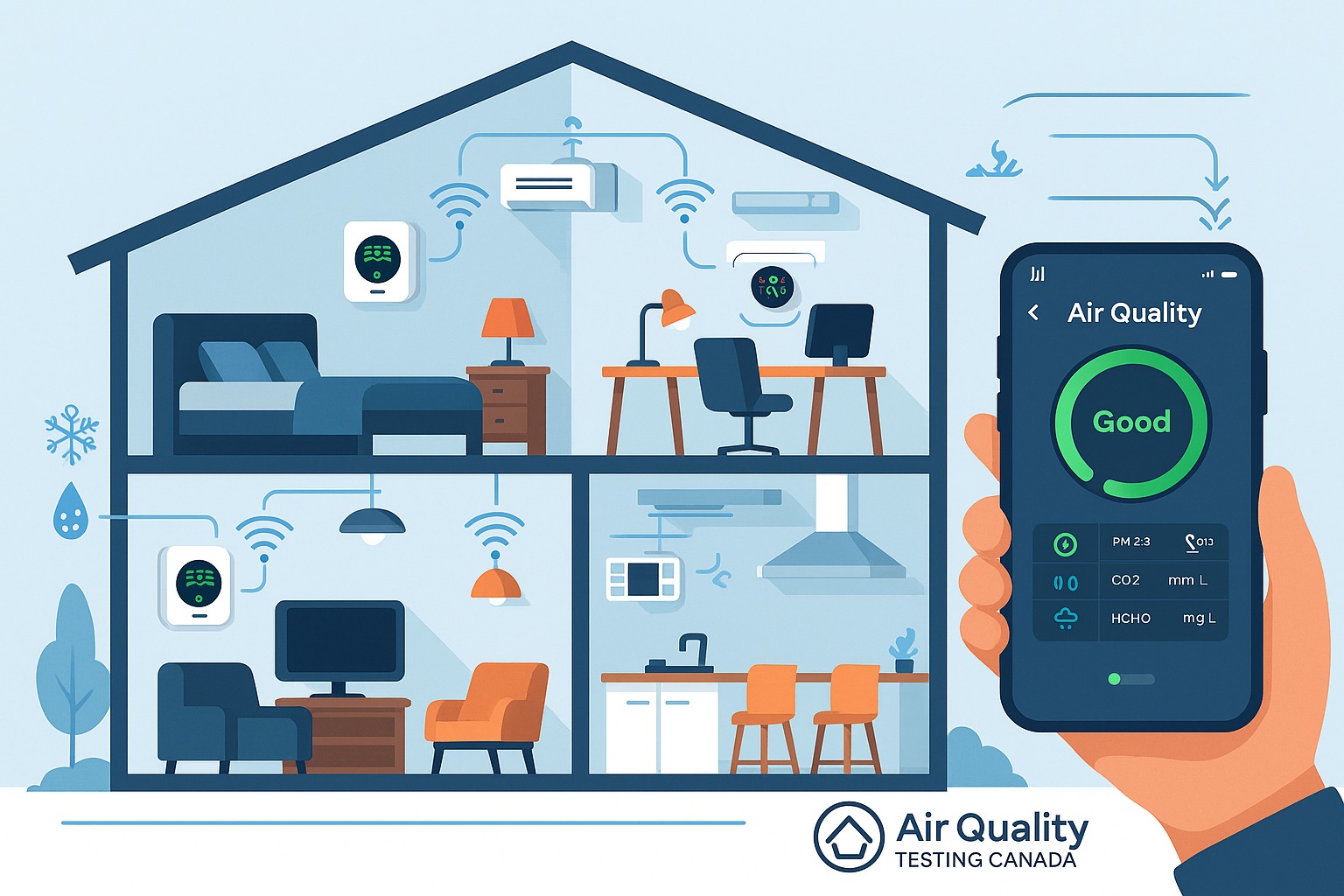
Smart monitors connect to smartphone apps via WiFi or Bluetooth. Apps provide detailed charts, historical data, and air quality recommendations. Smart features cost more but offer better long-term value.
- Smartphone app integration
- Historical data and trends
- Automated alerts and notifications
- Smart-home automation
Best for: Tech-savvy users wanting detailed monitoring
One-Time Use vs Reusable Air Quality Test Kits
Testing frequency affects which kit type provides the best value for your situation and ongoing air quality needs.
Single-Use Testing
One-time tests work well for specific situations like home buying, post-renovation checks, or investigating sudden health problems.
- Lower upfront costs
- Specific situation testing
- Professional-grade accuracy
- Legal documentation
Examples: Radon testing, post-renovation VOC checks, mold after water damage
Reusable Monitors
Reusable monitors provide ongoing air quality tracking for long-term health management. They help you understand how daily activities affect your indoor air.
- Continuous monitoring
- 3–5 year lifespan
- Low per-use cost
- Software updates
Best for: Families with asthma, allergies, or chronic conditions
Professional vs DIY Air Quality Testing
Knowing when to use professional services versus DIY kits helps you get accurate results while managing costs effectively.
To see what a pro visit actually runs, here’s professional air quality testing cost in Canada.
When DIY Testing Works Best
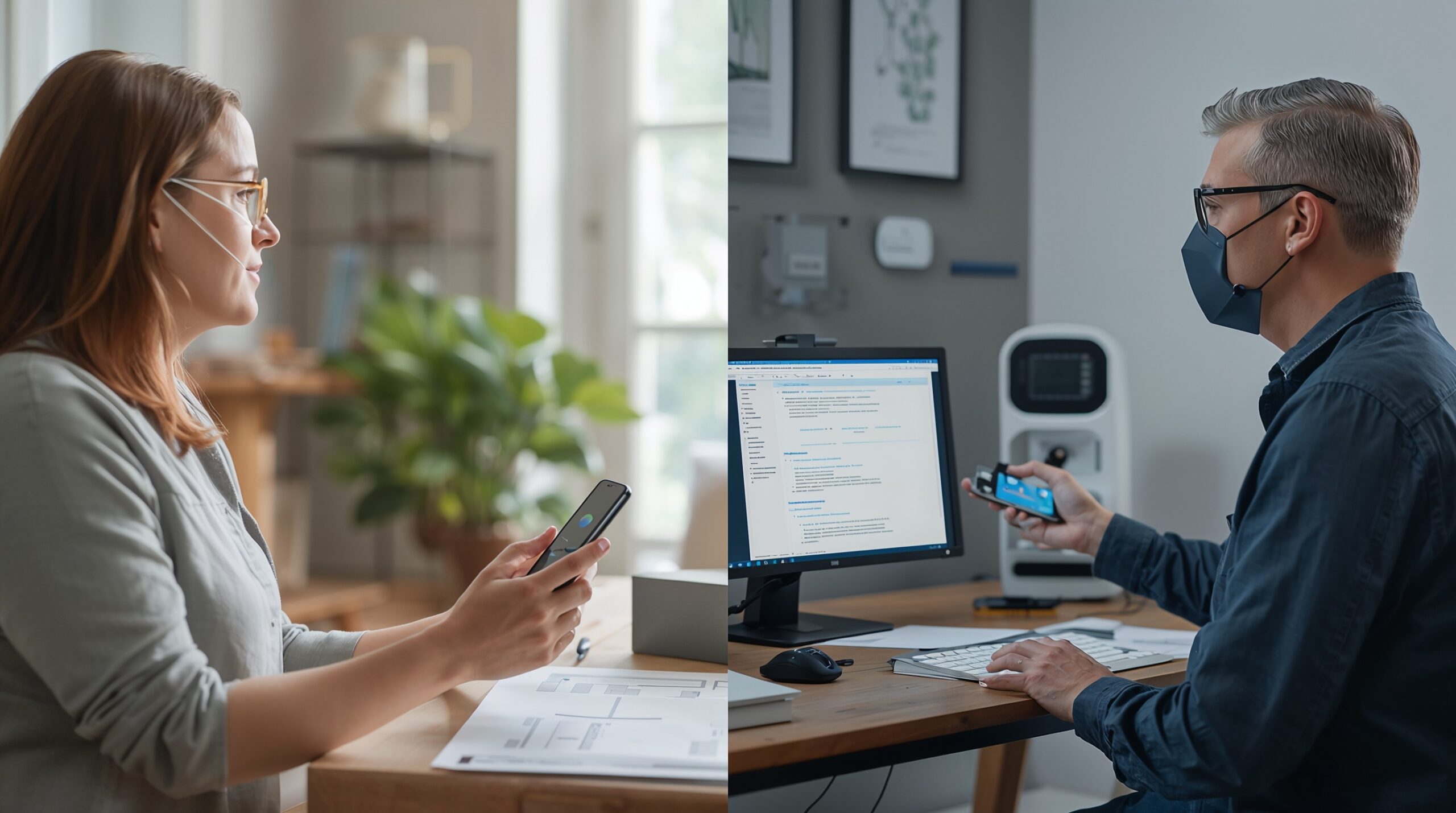
DIY kits work well for routine monitoring and basic screening. Use them to track air quality trends, identify obvious problems, or monitor improvement after making changes.
- Lower costs
- Immediate results
- Common pollutant screening
- Regular maintenance monitoring
Good for: Healthy families doing routine air quality maintenance
Professional Testing Advantages
Professional testing provides laboratory accuracy and expert interpretation. Choose professional testing for health-related decisions, legal situations, or when DIY results indicate potential problems.
- Laboratory-grade accuracy
- Expert interpretation
- Legal compliance
- Comprehensive analysis
Best for: Health concerns, real estate, insurance claims
How to Choose the Right Air Quality Test Kit
Selecting the best air quality test kit depends on your specific health concerns, budget, and technical comfort level. The decision tree below maps the four most common Canadian-home concerns to the right kit type.
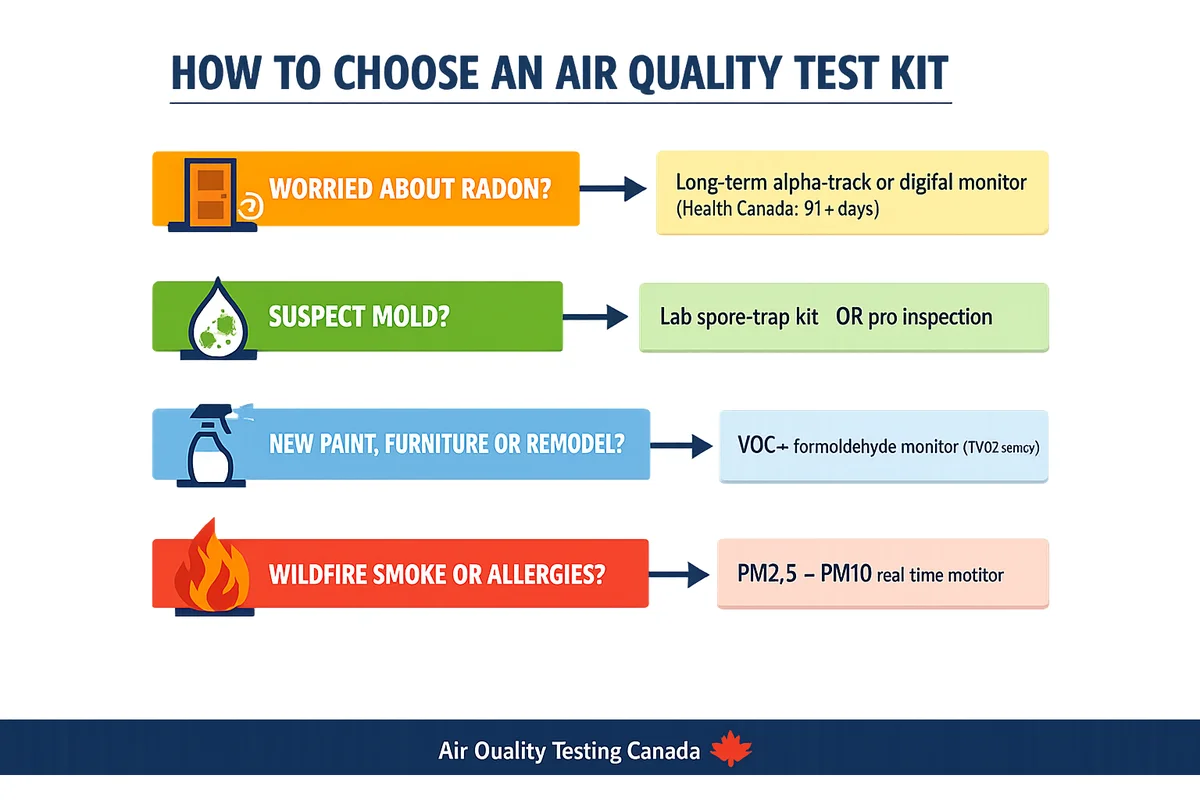
Match your testing approach to the health problems you’re experiencing. Breathing difficulties suggest particle pollution or mold testing. Headaches and fatigue often indicate CO2 or VOC problems.
If family members have different symptoms, start with comprehensive testing that covers multiple pollutants. This approach costs more initially but prevents buying multiple single-purpose kits.
Signs your home needs air quality testing include persistent allergies, musty odours, or health problems that improve when you leave home.
Older homes face different air quality challenges than new construction. Pre-1990 Ontario and Quebec homes are highest risk for both asbestos and elevated radon. New homes typically have VOC problems from fresh materials and finishes.
Location affects which pollutants to prioritize. Urban homes need particle pollution monitoring. Rural homes may have radon or agricultural-chemical concerns. Homes near busy roads need traffic pollution testing.
Simple test strips work well for people who want basic yes/no answers about air quality problems. Digital monitors suit people comfortable with smartphone apps and data interpretation.
Professional testing makes sense when you need legally defensible results or have complex health conditions. Choosing air quality testing services in Canada helps you decide between DIY and professional approaches.
Top Air Quality Test Kit Recommendations for Canadian Homes
These six air quality test kits are widely available in Canada through Canadian Tire, Best Buy, Home Depot, Amazon.ca, or specialty retailers. Prices in CAD, accurate as of May 2026.
| Kit | Best for | Measures | CAD price |
|---|---|---|---|
| Airthings View Plus | All-in-one whole-home monitor | Radon, PM2.5, CO2, VOCs, humidity, temperature | $399–$499 |
| Airthings Corentium Home 2 | Long-term radon test (Health Canada 91-day rule) | Radon only — C-NRPP listed | $199–$249 |
| Aranet Radon Plus | Fast radon screening (10-minute first reading) | Radon, CO2, humidity, temperature, pressure | $369–$429 |
| IQAir AirVisual Pro | PM2.5 and wildfire smoke tracking | PM2.5, CO2, temperature, humidity | $369–$429 |
| Awair Element | Budget all-rounder | PM2.5, CO2, VOCs, temperature, humidity | $199–$249 |
| Mail-in lab kit (mold or asbestos) | Suspected mold or asbestos | Spore-trap or fibre-count lab analysis | $80–$250 / sample |
When to Call Professional Air Quality Testing Services
Some air quality situations require professional expertise and equipment beyond what consumer test kits can provide.
Serious health symptoms require professional-grade testing accuracy. If family members have persistent respiratory problems, frequent headaches, or unexplained allergies, professional testing provides medical-grade results.
Property transactions often require professional air quality testing for legal protection. Professional results hold up in court if air quality problems affect property values or cause health damages. Pre-purchase air quality testing is standard for buyers in Ontario and Quebec.
Mysterious odours, unexplained health symptoms, or suspected chemical contamination require professional investigation. Professionals have specialized equipment to identify unusual pollutants.
Understanding Air Quality Test Results
Getting accurate results is only half the battle. Understanding what the numbers mean and taking appropriate action protects your family’s health.
Reading Digital Displays
Most digital monitors use colour-coded displays — green, yellow, red. On consumer monitors, indoor PM2.5 should average under 12 µg/m³, CO2 should stay below 1,000 ppm, and TVOC should sit under 0.3 mg/m³ outside of cleaning sessions.
- PM2.5: below 12 µg/m³ (good)
- CO2: below 1,000 ppm (adequate ventilation)
- VOCs: below 0.3 mg/m³ (safe for most people)
- Radon: below 200 Bq/m³ (Health Canada guideline)
Laboratory Reports
Professional lab reports give detailed measurements with health comparisons. Reports typically include normal ranges, your specific results, and recommendations for addressing problems.
- Specific pollutant identification
- Health risk comparisons
- Source identification
- Action recommendations
Frequently Asked Questions
The questions Canadian homeowners ask us most often about air quality test kits.
You have three options. A consumer air quality monitor like the Airthings View Plus or Awair Element gives real-time readings of PM2.5, CO2, VOCs, humidity, and (on premium models) radon. A mail-in lab kit takes a single air sample and ships it to an accredited laboratory for mold spores, asbestos fibres, or VOC analysis. Single-use test strips are the cheapest screening option for mold and formaldehyde.
For a full picture of indoor air quality in your home, we recommend a continuous monitor for live trends plus a 91-day radon test as a baseline.
Consumer monitors from established brands (Airthings, IQAir, Aranet, Awair) are accurate enough to identify trends and flag problems. They’re not laboratory grade, and their sensors drift over time, so calibrate or replace them on the manufacturer’s schedule.
Single-use mold and asbestos test strips have a higher false-negative rate — if you have a real problem, follow up with a professional indoor air quality inspection and lab analysis. Health Canada’s position on radon is that any C-NRPP listed device used for 91 days is sufficient for a homeowner decision.
For screening, a mail-in spore-trap mold test kit ($80–$150 per sample) gives you a count of viable mold spores by genus. For ongoing monitoring, the Airthings Wave Mini ($99) tracks the humidity and temperature conditions where mold grows.
If you can already see mold or smell a musty odour, skip the kit — book a professional mold inspection. We use spore traps with same-week scheduling across Montreal, Ottawa, Gatineau, and surrounding areas.
Health Canada doesn’t endorse a specific brand but requires that any device used be listed by the C-NRPP (Canadian National Radon Proficiency Program). For a one-time long-term test, an alpha-track mail-in radon test kit ($35–$60) is the cheapest accurate option. For ongoing monitoring, the Airthings Corentium Home 2 and Aranet Radon Plus are both C-NRPP listed and give you live readings on your phone.
Test for at least 91 days during fall or winter under closed-house conditions. Above 200 Bq/m³, hire a C-NRPP certified mitigator.
DIY options range from $25 for a single-use mold or formaldehyde strip, to $80–$250 for a mail-in lab kit, to $200–$800 for a multi-pollutant continuous monitor.
A professional indoor air quality inspection in Ontario or Quebec typically runs $300–$650 for a residential property and includes lab-grade equipment, accredited Canadian lab analysis, and a written report you can hand to a doctor, an insurer, or a real estate buyer.
Yes — with caveats. An asbestos air-sample kit collects airborne fibres on a filter cassette which you mail to an accredited lab for transmission electron microscopy (TEM) or phase-contrast microscopy (PCM) analysis. These kits cost $150–$250 per sample and are appropriate when you suspect disturbed asbestos-containing material in a pre-1990 home.
They are not a substitute for bulk-sample testing of suspected materials (drywall, vermiculite insulation, popcorn ceilings, vinyl tiles). For asbestos in occupied homes, we recommend a professional asbestos inspection.
Common symptoms include persistent headaches, dry or irritated eyes and throat, increased asthma or allergy symptoms, fatigue that lifts when you leave the house, and a musty or chemical smell that won’t air out. Visual signs include condensation on windows, visible mold on walls or ceilings, dust accumulating faster than usual, and unexplained wall or ceiling staining.
If symptoms cluster around one room or get worse seasonally, that’s the room to test first. Read more in our guide to signs your home needs air quality testing.
Protecting Your Family’s Health
Air quality testing protects your family’s health by identifying invisible pollutants before they cause serious problems. The right testing approach depends on your specific needs, budget, and health concerns.
Years Experience
Inspections Completed
Scheduling
Service Coverage
Ready to Test Your Home’s Air Quality?
Get professional air quality testing from certified experts. Call today for same-week scheduling across Ontario and Quebec.