

Air Quality Testing in Toronto
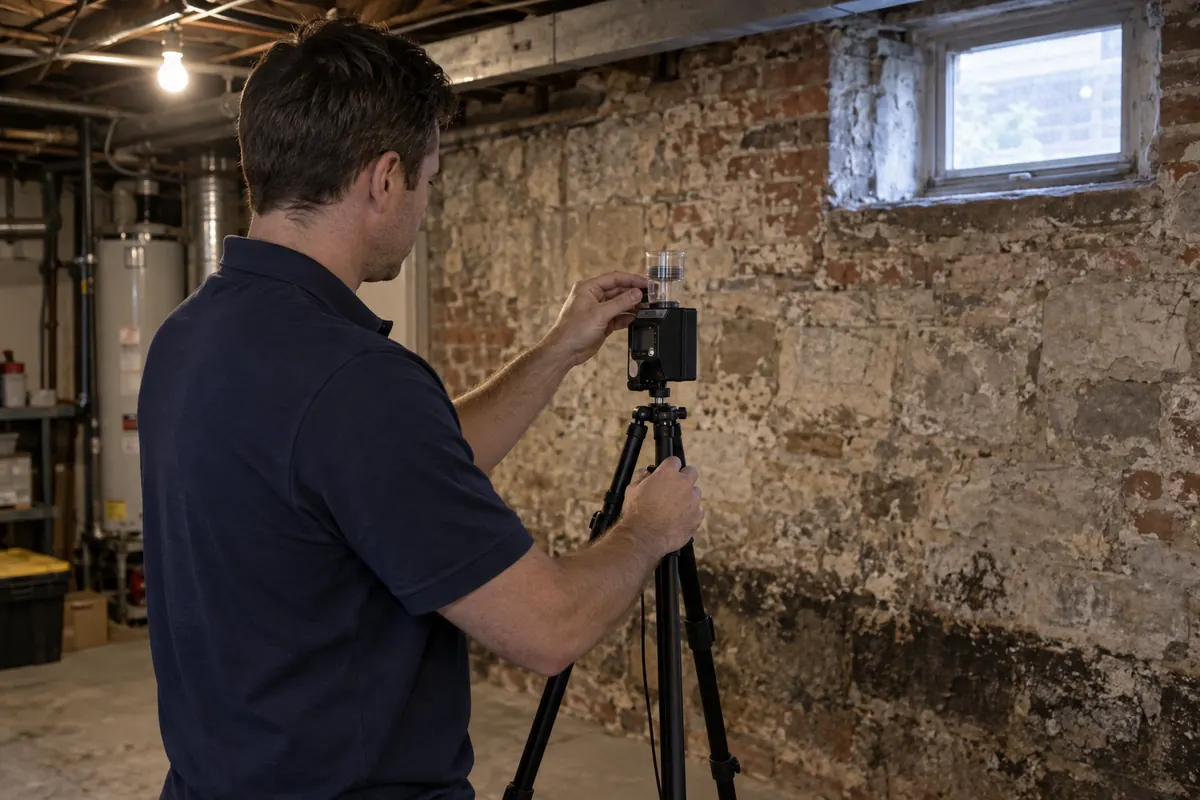
Air quality testing in Toronto means an inspector samples your home and an accredited lab reads the samples. You get a written answer on mold and asbestos. Until then, a musty smell in a Toronto basement is a question, not a diagnosis.
Accredited lab analysis
IICRC certified, IAQA member
Book your Toronto inspection
Tell us what you’re seeing. We’ll come back to you with a flat-rate quote.
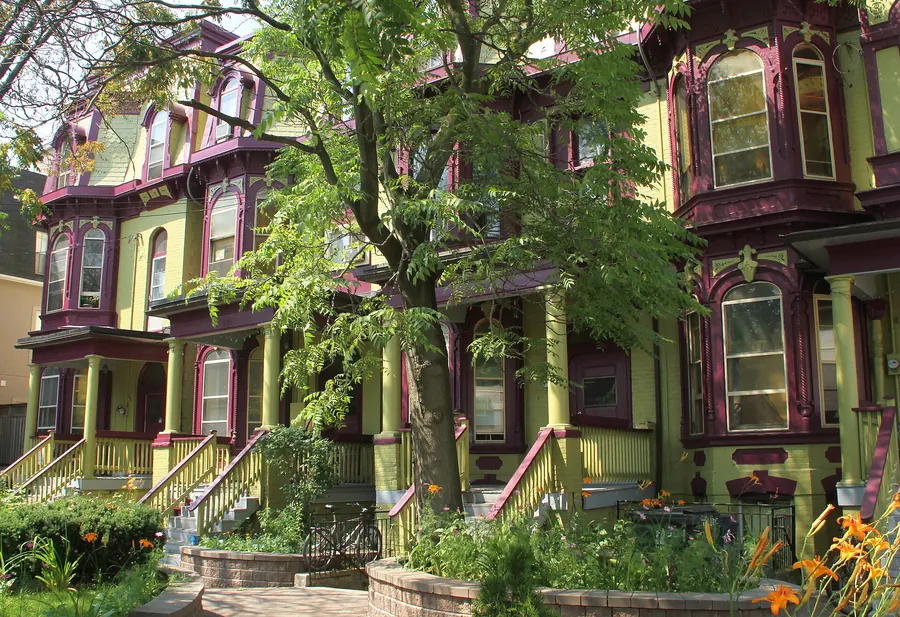
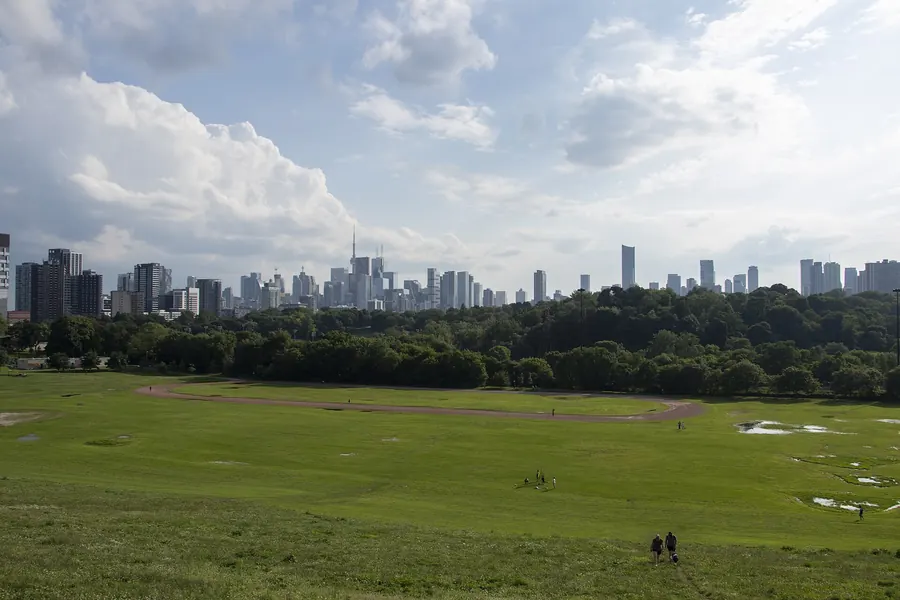
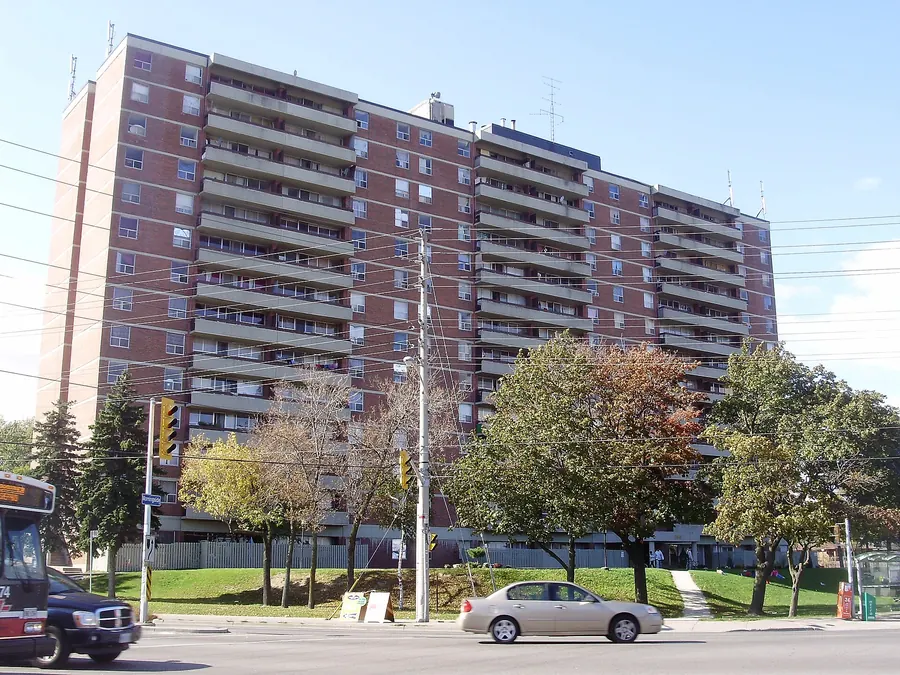
Three Toronto eras: Cabbagetown row houses, the Riverdale Park skyline and a West Hill apartment tower.
Photos via Wikimedia Commons: Cabbagetown by dbking (CC BY 2.0); Riverdale Park by Dillan Payne (CC BY-SA 2.0); West Hill by GTD Aquitaine (public domain).
Toronto Air Quality and Mold Testing at a Glance
| Phone | 1-866-528-2897 |
|---|---|
| Hours | Customer service 24/7. Inspections Monday to Friday, 8 AM to 5 PM |
| Serving | All of Toronto, including North York, Etobicoke, Scarborough and East York, plus York Region and Durham |
| Travel fee | None in the GTA |
| Air quality and mold testing | CAD 550 plus tax (1 air sample + outdoor baseline), CAD 260 per extra sample |
| Asbestos testing | CAD 430 plus tax for the first material, CAD 250 per extra |
| Results | Written inspection report within 1 business day of the visit. Mold lab results in 2 to 5 business days, asbestos in 3 to 4 |
Full breakdowns: air quality testing cost and asbestos testing cost.
We test Toronto homes and workplaces for mold and asbestos, the two things behind most indoor air quality worries. Our own inspectors come to you, an accredited lab analyzes every sample, and a mould air test is CAD 550 plus tax, with the outdoor baseline and written report included. You'll get a flat-rate quote before anyone books a visit.
You're probably here with a smell, a stain or a renovation you don't want to start blind. We've run more than 15,000 inspections since 2005, and the plan never changes: look first, sample only what needs sampling, let the lab give the answer. If you're wondering what indoor air quality covers before you call, that guide is a good start.
Last updated: 2 November 2026
Air quality testing in Toronto starts with the age of your building
Most Toronto homes went up when asbestos was still common in building materials. The 2021 census counts about 1.16 million occupied dwellings in the city. Of those, 58.1% were built before 1981 and 67.5% before 1991, and Health Canada says that before 1990 asbestos was mainly used for insulating and fireproofing buildings and homes. Picture three homes on a Toronto street: two of them were built in that window.
Those city averages hide huge swings from one neighbourhood to the next. In Runnymede-Bloor West Village, 84% of homes date from 1960 or earlier. In Fort York-Liberty Village, 3% are older than 1981. The two neighbourhoods need different conversations, even though both have a Toronto postal code.
| Toronto neighbourhood | Built 1960 or earlier | Built before 1981 |
|---|---|---|
| Runnymede-Bloor West Village | 84% | 93% |
| North Riverdale | 77% | 93% |
| Danforth | 76% | 89% |
| Old East York | 70% | 85% |
| The Beaches | 65% | 76% |
| Bendale South (Scarborough) | 54% | 89% |
| Etobicoke West Mall | 23% | 75% |
| Scarborough Village | 22% | 65% |
| Willowdale West (North York) | 19% | 34% |
| York University Heights (North York) | 13% | 60% |
| Fort York-Liberty Village | 2% | 3% |
Source: City of Toronto neighbourhood profiles, 2021 census. Percentages are rounded, and the city totals are our own sum of the 158 neighbourhoods.
Take any of those numbers with some caution, though. A neighbourhood average can't tell you about your house. A 1920s semi may have a 2015 basement, and a 2005 addition can sit on top of 1950s pipe wrap. We go by what's in the wall and what's about to be disturbed, not by the date on the listing. Here's what each era usually means for a test:
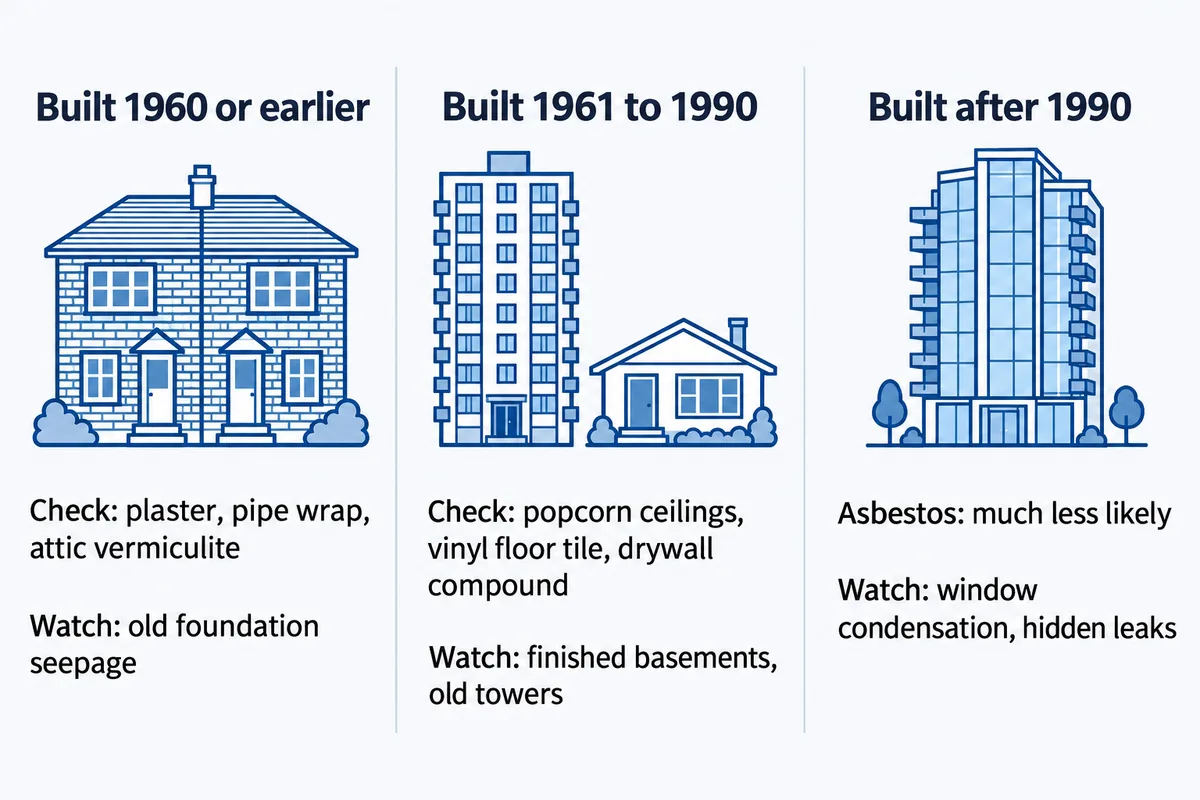
Built 1960 or earlier (29.3% of homes)
Brick semis, row houses and early bungalows. Older foundations weren't built with today's waterproofing, so a finished basement can hide seepage behind the studs. For asbestos, we look at plaster, pipe wrap and attic vermiculite.
Built 1961 to 1990 (38.2%)
Apartment towers and suburban houses across Scarborough, North York and Etobicoke. Popcorn ceilings, vinyl floor tile and drywall compound are the usual suspects. A renovated unit can still have the old layer underneath.
Built after 1990 (32.5%)
Newer houses and glass condos. Asbestos is much less likely here, though only a lab can rule out a specific material. The mould question moves to window condensation, hidden leaks and shared walls.
But water, not age, is what grows mould in a Toronto home
Mold needs moisture, so a dry 1920s semi can be fine and a three-year-old condo can have a problem. Health Canada's advice starts there: control humidity and repair water damage. That's why a Toronto inspection starts with where water has been.
Toronto has given plenty of homes a reason to ask. On July 16, 2024, Toronto Pearson recorded 97.8 mm of rain, its fifth rainiest day on record, including 26 mm in a single 10-minute span. The City's 311 line took more than 700 calls about basement flooding that day. A basement that dried out and got new paint can still have damp insulation behind the wall.
If your basement has flooded, the City of Toronto's Basement Flooding Protection Subsidy Program offers up to $6,650 per property to owners of single-family homes, duplexes, triplexes and fourplexes. Check the City's rules before you book the work.
Towers have their own version of the problem. Nearly half of Toronto's homes (46.7%) are in buildings of five storeys or more, where the moisture usually comes from a window that runs wet all winter, a leak from the unit above or a bathroom fan that doesn't move much air. The stain on the sill is easy to see, but the drywall behind it can hold more.
So a mold test in Toronto starts with an inspection, because an air sample can't answer everything
Health Canada says that in most situations it does not recommend testing the air for mould. An air test can't predict health effects, and it often says little about what caused the damage. Canada has no health-based exposure limit for indoor mould either, so no lab report can say your air is "safe" in that sense.
We agree with most of that, and it's why we walk the home first. If you can see the growth and you know where the water came from, you may not need an air sample at all. A visual inspection is CAD 95 plus tax for that reason.
Health Canada also names the case where air testing helps: concerns that stay unexplained after an inspection, especially after flooding, roof leaks or pipe leaks that may have reached wall cavities. A spore test can then point to a hidden problem. A Toronto basement that took on water in July 2024 can fit that description, and that's when our mold testing earns its price, because we compare the indoor sample with an outdoor baseline, so the count has something to be measured against.
Myth An air test will tell me whether the mold is making my family sick.
Fact It can't. It shows which spores are present and how they compare with outdoors. For health questions, talk to your doctor and bring the report with you.
Myth Black mold means toxic mold.
Fact Colour doesn't name a species. Health Canada's advice is the same whatever is growing: fix the moisture and clean up the mould.
Myth A new condo can't have a mold problem.
Fact A building's age matters for asbestos. Mold only needs moisture and something to grow on, and a two-year-old unit can have both.
Therefore every Toronto air quality test ends with lab results in writing
Once sampling makes sense, an accredited third-party lab reads the samples, so the person who took them isn't the one grading them. It's the same lab we use everywhere else, and the Toronto price is the same as well.
Mold testing
Air samples in the rooms that worry you, one sample outside as a baseline, and surface samples where we can see growth. The lab names the spore types and counts them. Mold testing can also cover the check after a cleanup crew finishes.
Asbestos testing
Small samples of the materials you plan to disturb, such as ceiling texture, floor tile, plaster or pipe wrap, sealed on site and analyzed under a microscope. Asbestos testing gives you a yes or no for each material.
-
1
Before the visit
You tell us what you're seeing
Call or use the form. You get a flat-rate quote based on how many samples or materials the job is likely to need.
-
2
Visit day
We walk the home before we sample anything
Moisture readings, the basement, bathrooms, windows and the materials you plan to touch come first, so the samples go where the question is.
-
3
Within 1 business day of the visit
You get the written inspection report
What we saw, where we sampled and why, in plain language.
-
4
2 to 5 business days for mold, 3 to 4 for asbestos
The accredited lab returns its results
Surface samples tend to come back faster than air samples. Rush analysis is available for an added fee.
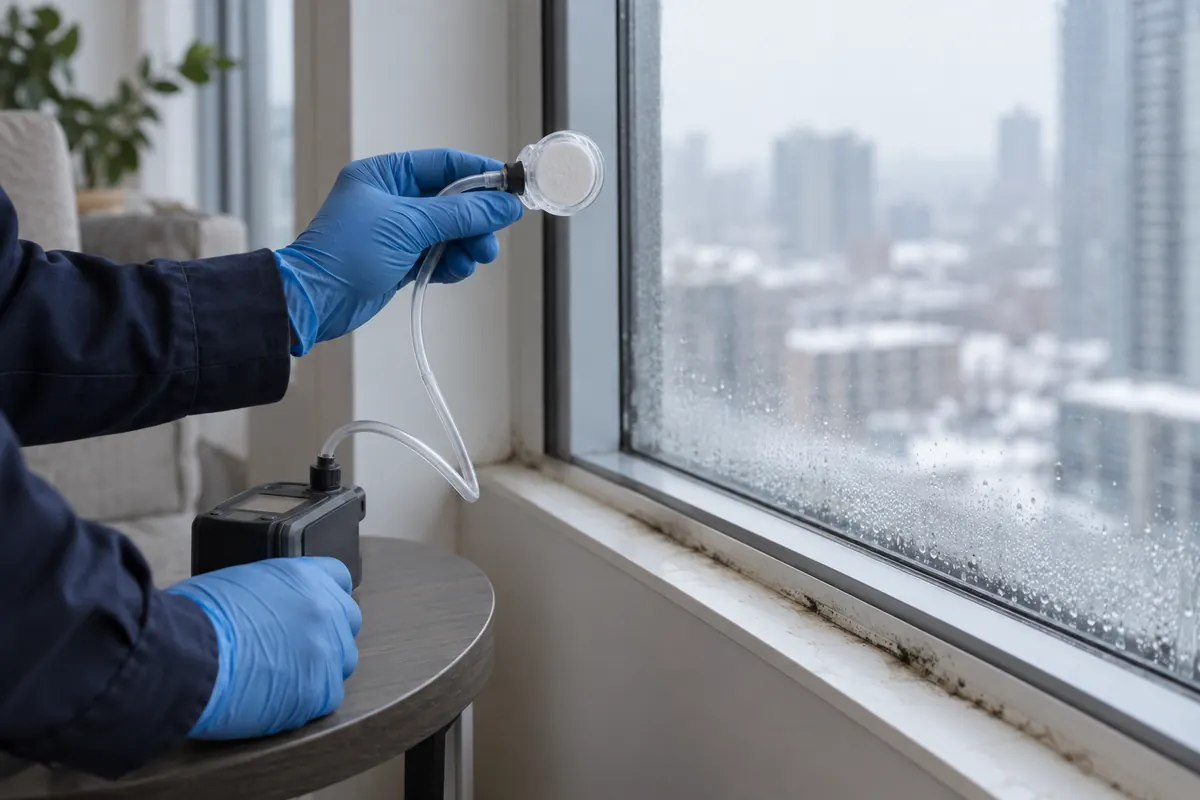
In an old Toronto basement, I look at the wall before I turn on the pump. If the moisture reading and the stain already tell the story, you may not need an air sample. The sample earns its price when something doesn't add up, like a smell with no source after a leak.
 Luka Markovic
Senior Indoor Environmental Inspector and Engineer · Certified Mold Inspector (CMI) · More than 1,700 on-site and virtual inspections
You can read more about what happens during an inspection before you book.
Asbestos testing before a Toronto renovation protects you even where the law doesn't require it
Ontario's asbestos rule puts the legal duty on some owners and not on others. Under Ontario Regulation 278/05, section 10, an owner must have materials likely to be disturbed examined for asbestos before tendering or arranging demolition, alteration or repair. Section 2(4) exempts an owner of a private home that they or their family live in, and an owner of a building of up to four units when one is occupied by the registered owner or their family.
So a landlord with a 12-unit walk-up, a condo corporation or an office owner in Toronto has that duty, and a family renovating its own Bloor West bungalow doesn't. We're inspectors, not lawyers, so check your own case if it's close. But the exemption covers the owner only. The regulation still applies to the employers and workers doing the repair, so a careful contractor may well ask what's in that ceiling before cutting it.
Leave it alone until you know. Health Canada says asbestos left undisturbed poses no significant health risk. The risk comes from drilling, sawing, sanding, scraping or breaking the material, which puts fibres in the air you breathe. Looking at it can't settle the question, because only a lab can tell one popcorn ceiling from another.
If you've searched the "3-5-7 rule", it comes from Table 1 of the same regulation. It sets the minimum number of bulk samples for each area of one material:
| Material | Area | Minimum bulk samples |
|---|---|---|
| Surfacing material sprayed or trowelled on, such as acoustical plaster on ceilings | Under 90 square metres | 3 |
| Surfacing material | 90 to under 450 square metres | 5 |
| Surfacing material | 450 square metres or more | 7 |
| Thermal insulation | Any size | 3 |
| Thermal insulation patch | Under 2 linear metres or 0.5 square metres | 1 |
| Other material | Any size | 3 |
One result of 0.5% or more asbestos by dry weight makes the whole area of that material asbestos-containing under the regulation, and the lab doesn't need to analyze the rest. A positive result is a planning decision. If you're not renovating, you can often leave the material alone. If you are, a qualified abatement contractor handles it, and the written report tells them exactly what they're dealing with.
Renters and condo owners in Toronto have a different first step before mold testing
Toronto is almost evenly split between owners and renters (48.1% of households rent), and 30.4% of homes are condominiums. If you rent or own a condo, the leak may not be yours to fix, so start with the person who can fix it.
If you rent
The City says all property owners must repair and maintain their property, including rentals. Tell your landlord or property manager first and submit a service request. If that doesn't resolve it in a timely way, contact 311 so the City can investigate. You can also apply to the Landlord and Tenant Board.
If you own a condo
Water coming from the unit above, a shared wall or the building envelope is a question for your property manager, so report it in writing and take dated photos. A written report helps when the unit owner and the corporation don't agree on where the moisture started.
We need the owner's OK, or someone authorized by the owner, to inspect a property. Tenants without that approval can still book a virtual inspection for CAD 100 plus tax, which is often enough to know what to raise with the landlord. Property managers and owners of larger buildings should look at our commercial air quality testing.
What air quality testing costs in Toronto, with no GTA travel fee
Toronto prices are the same as everywhere else we work. Each price below is in Canadian dollars, plus tax.
| Service | Price | What you get |
|---|---|---|
| Mould air test | $550 | Visual and diagnostic inspection, 1 indoor air sample, free outdoor baseline sample, lab analysis, written report. Each extra sample is $260 |
| Visual inspection only | $95 | On-site inspection with no sampling. A written report adds $155 |
| Virtual inspection | Free, $100 for tenants | A first look with an inspector, without a site visit |
| Asbestos bulk testing | $430 | First material, lab analyzed. Each extra material is $250 |
| Vermiculite attic insulation | $550 | Testing of vermiculite in the attic |
| Tape lift or wall-cavity sample | Quoted by our team | Priced once we know what's needed |
Slow down on the sample count, because that's what moves your total. Two rooms for mold come to $810, and three rooms come to $1,070. A bungalow with a popcorn ceiling, vinyl tile and pipe wrap is three asbestos materials, so $930. Six materials is $1,680. House size matters far less than how many samples or materials the job needs.
You'll see lower prices online, and some Toronto companies do charge less for a first step. Before you compare, ask whether the number includes the lab analysis, an outdoor baseline and a written report. Those three things are what make a result useful to a contractor, a landlord or an insurer.
We test air quality across Toronto, York Region and Durham, and the housing changes as you go
Our inspectors serve the whole city. We don't have a Toronto street address to list yet, so everything books by phone or through the form. These are some of the neighbourhoods on the map:
- Old Toronto: The Annex, Cabbagetown, Rosedale-Moore Park, Forest Hill, Trinity-Bellwoods, Roncesvalles, South Parkdale, High Park, The Junction, Liberty Village
- East York and the east end: Danforth, North Riverdale, Leaside, Old East York, The Beaches, Blake-Jones
- North York: Willowdale, Lawrence Park, Parkwoods-O'Connor Hills, York University Heights, Weston
- Etobicoke: Mimico, Long Branch, Kingsway South, Markland Wood, Rexdale
- Scarborough: Bendale, Clairlea-Birchmount, Scarborough Village, West Hill
Outside the city, the census tells two very different stories, and they change what we'd test first.
York Region
Vaughan (including Woodbridge), Markham and Richmond Hill are young compared with Toronto. Only 7.6% of Vaughan's homes went up before 1981, along with 18.5% in Markham and 15.1% in Richmond Hill. More than half were built since 2001: 53.0% in Vaughan, 61.5% in Markham and 65.8% in Richmond Hill.
Mold is usually the first question here. Most homes are houses (62.5% of Vaughan's are single-detached, 56.2% of Markham's), so that means the basement, the attic and the bathroom fan. Asbestos still matters in the older village cores, like Woodbridge and Unionville, and in any pre-1990 home you're opening up.
Durham Region
Oshawa's homes are about as old as Toronto's: 58.6% were built before 1981 and 23.6% in 1960 or earlier. Asbestos belongs on the list before any Oshawa renovation. It's also a renter's city, with 35.8% of households renting, so the steps for renters above apply there too.
Whitby (24.8% before 1981) and Ajax (23.1%) are much newer. Pickering sits in between: 31.2% before 1981, then a big 1980s wave takes it to 58.0% before 1991. That wave came before the 1990 line Health Canada uses for asbestos, so a Pickering home from 1985 deserves the same care as an older one.
Source: Statistics Canada, 2021 Census Profile, occupied private dwellings by period of construction, structural type and tenure.
Elsewhere in the GTA or further east? Our service areas page lists every city with its own page, and a quick call will settle the rest.
- Since 2005 testing homes in Ontario and Quebec
- 15,000+ inspections
- IICRC Certified
- IAC2 Certified
- Certified Indoor Air Quality Inspector
- Certified Professional Inspector
- Indoor Air Quality Association (IAQA) corporate member
Toronto air quality, mold and asbestos testing questions
A mould air test is CAD 550 plus tax. That covers the inspection, one indoor air sample, a free outdoor baseline sample, lab analysis and a written report. Each extra sample is CAD 260, so two rooms come to CAD 810. There's no travel fee in the GTA. Our air quality testing cost guide has the full breakdown.
Asbestos testing is CAD 430 plus tax for the first material and CAD 250 for each extra one. A bungalow with a popcorn ceiling, vinyl tile and pipe wrap is three materials, so CAD 930. The number of materials moves the price more than the size of the home. See our asbestos testing cost guide.
Often, yes, if you can't find the source. A smell with no visible growth, a past basement flood or a leak into a wall are the cases an inspection can sort out. If you can see a small patch and you know what caused it, you may not need one. Fix the moisture and clean it up, which is Health Canada's own advice.
Landlords must repair and maintain their rental property, and that includes the leak or damp behind the mold. Tell your landlord or property manager first and submit a service request. If it isn't resolved in a timely way, contact 311 so the City can investigate. You can also apply to the Landlord and Tenant Board. We're inspectors, not lawyers, so get legal advice on a dispute.
The 3-5-7 rule comes from Table 1 of Ontario Regulation 278/05. Surfacing material needs at least 3 bulk samples under 90 square metres, 5 from 90 to under 450 square metres, and 7 at 450 square metres or more. Thermal insulation and other materials need 3, and a small insulation patch needs 1. See our asbestos testing service.
Yes, a virtual one. Our virtual inspection is free inside our service area, which includes Toronto, and CAD 100 plus tax for tenants. It's a useful first look, but it can't replace sampling. Calling 311 about a rental is a different thing: that's a property standards complaint and won't get you a lab result. An on-site visual inspection starts at CAD 95 plus tax.
Yes. Our own inspectors do the visits in Toronto and the rest of the GTA, and there's no travel fee. Samples go to the same accredited lab we use everywhere else. We don't have a Toronto street address to list yet, so book by phone at 1-866-528-2897 or through the form on this page.
Trade the Guess for a Lab Result in Your Toronto Home
A musty smell is a question and an old ceiling is a maybe. Book a visit and an accredited lab gives you a written answer you can act on.
Customer service 24/7 · Inspections Monday to Friday, 8 AM to 5 PM · Flat-rate quotes